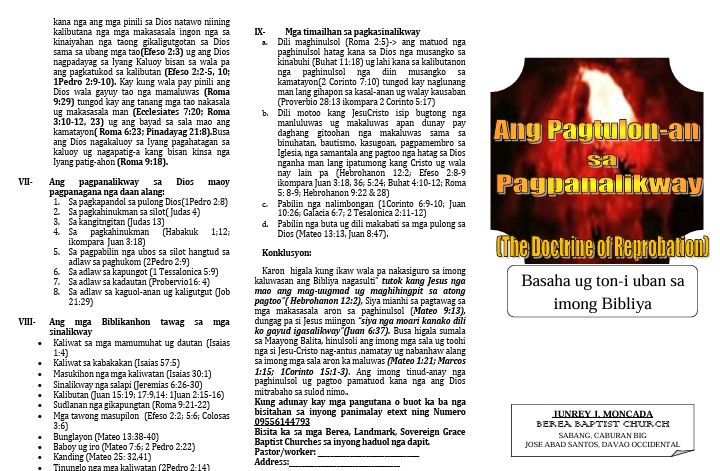
The Doctrine of Reprobation

(Translate out from Cebuano tract since 2013)

Junrey J Moncada

Pastor of Berea Baptist Church, Sabang, Caburan Big, Jose Abad Santos, Davao Occidental, Philippines

Introduction
One of the most difficult and detested doctrines in the Bible is the doctrine of reprobation. However, it is not appropriate for us to reject this truth merely on account of our own reasons. A true preacher of God must teach the whole truth of God despite much opposition, because that is the duty of those truly called by God as His faithful servants.
Therefore, let us study and give attention to this truth concerning the doctrine of reprobation as recorded in Holy Scripture.


I. The Term “Reprobation”


The term “reprobation” derives from the word reprobate.
Reprobate means abandoned, forsaken, left behind.
According to Webster’s New Dictionary (page 319): rejected by God.
According to Scribner Bantam English Dictionary (page 769): given over to sin.
In Hebrew: mâ’ac; in Greek: adokimos, meaning rejected, abandoned.


II. Reprobation as a Biblical Doctrine


a. Regarded as rejected silver (Jeremiah 6:28-30)
b. Those who fail in ministry [reprobate] (2 Corinthians 13:5)
c. Corrupt in mind and reprobate concerning the faith (2 Timothy 3:8)
Another clear description of reprobation can be found in Romans 9:19-23, where the reprobate are described as vessels prepared for destruction.


III. Reprobation Occurred in Eternity Past


Romans 9:11 – Even before the children were born or had done anything good or bad.
Psalm 58:3 – The wicked are estranged from the womb.
Proverbs 16:4 – God made everything for His own purposes, even the wicked for the day of evil.
Jude 4 – There are certain people who crept in unnoticed, who long ago were designated for condemnation, ungodly people who pervert the grace of God.
Revelation 13:8 and 17:8 – The names of people not written in the book of life belonging to the Lamb who was slain, from the foundation of the world.


IV. God’s Plan in His Election to Salvation and Reprobation to Destruction


God’s Election to Salvation
This is for His glory, to manifest His love and mercy.
Isaiah 43:7 compared with Romans 9:16, 23; Ephesians 2:4-5; 1 Timothy 1:12-17
God’s Reprobation to Destruction
This is to manifest His power through the demonstration of His holy justice.
Romans 9:17-22 compared with Romans 2:5, 16; Revelation 20:15
God’s election to salvation is for those people prepared to inherit His kingdom before the foundation of the world (Matthew 25:33-34).
God’s reprobation to destruction is for those people prepared for His wrath (1 Thessalonians 5:9), because God has already prepared the lake of blazing fire in hell for the reprobate (Isaiah 30:33; Matthew 25:41; Romans 9:21-22).


V. God’s Purpose Toward the Elect and the Reprobate


a. The Purpose of God the Father: He has chosen some to be saved before the foundation of the world, and He has also not chosen or reprobated others before the foundation of the world. (1 Peter 1:2; Ephesians 1:4; 2 Thessalonians 2:13; John 15:19; Romans 9:11 compared with Jude 4; Revelation 13:8; 17:8)


b. The Purpose of God the Father: He has given certain people to His Son to be saved through the death on the cross (John 6:37-39 compared with Revelation 5:9; John 10:11; 17:2, 5). And there are also those passed over from eternity who were not given to His only Son for redemption, as is clear in the prayer of Jesus Christ (John 17:9-12, 24).


c. The Purpose of God the Father: Those appointed to eternal life will surely believe when called through the preaching of the Gospel (Acts 13:48 compared with 2 Thessalonians 2:13-14; Colossians 1:17; 2 Timothy 1:9), while others are left and given over to their sinful condition (Psalm 81:12; 119:119; Acts 14:16; Romans 1:24) and to remain blind to the truth (2 Corinthians 4:4; Romans 11:7-8; John 8:47).


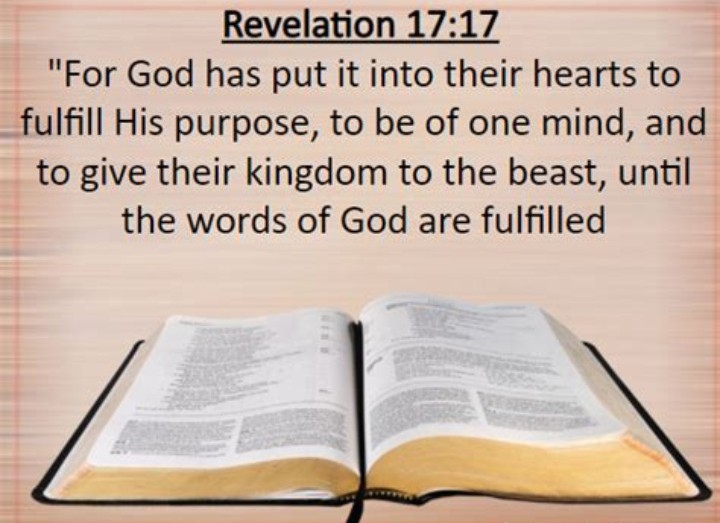
d. The Purpose of God the Father: To preserve His people so they will not be lost (Jeremiah 32:40; Psalm 37:23-24; Philippians 2:13; 1 Corinthians 11:32; Hebrews 12:5-8) and to keep the reprobate continually under judgment as deceived (2 Thessalonians 2:11-12; 2 Peter 2:9; Isaiah 42:16-17; Revelation 17:17).


VI. Reprobation Is Not Election to Destruction – or popularly known as double Predestination


God merely chooses certain people whom He will to have mercy upon and give grace so that they may be saved (2 Timothy 1:9 compared with Ephesians 1:4-5; 2:5; 2 Thessalonians 2:13; Titus 3:5). However, regarding reprobation, God does not choose people for destruction but simply passes over those not chosen for salvation, as evident in the words of our Lord Jesus Christ in John 15:19: “If you were of the world, the world would love its own; but because I chose you OUT OF the world, therefore the world hates you.”
In that verse we see that God’s elect are chosen out of the world, which means that those chosen by God were born into this world as sinners by nature, people detestable to God like all other people (Ephesians 2:3), and God manifested His mercy even before the foundation of the world (Ephesians 2:2-5, 10; 1 Peter 2:9-10). For if God had not chosen anyone, no one would be saved (Romans 9:29) because all people have sinned and are sinners (Ecclesiastes 7:20; Romans 3:10-12, 23), and the wages of sin is death (Romans 6:23; Revelation 21:8). Therefore, God has mercy on whom He will have mercy and hardens whom He will harden (Romans 9:18).


VII. God’s Reprobation Is Preparation in Advance For:


•Stumbling at the word of God (1 Peter 2:8)
•Condemnation to punishment (Jude 4)
•Darkness (Jude 13)
•Judgment (Habakkuk 1:12; compared with John 3:18)
•Remaining under punishment until the day of judgment (2 Peter 2:9)
•The day of wrath (1 Thessalonians 5:9)
•The day of evil (Proverbs 16:4)
•The day of trouble and wrath (Job 21:29)


VIII. Biblical Designations for the Reprobate


°Offspring of evildoers (Isaiah 1:4)
°Offspring of adultery (Isaiah 57:3)
°Rebellious children (Isaiah 30:1)
°Rejected silver (Jeremiah 6:26-30)
°The world (John 15:19; 17:9, 14; 1 John 2:15-16)
°Vessels prepared for destruction (Romans 9:21-22)
°Sons of disobedience (Ephesians 2:2; 5:6; Colossians 3:6)
°Tares (Matthew 13:38-40)
°Swine and dogs (Matthew 7:6; 2 Peter 2:22)
°Goats (Matthew 25:32, 41)
°Cursed children (2 Peter 2:14)
°Children of the devil (John 8:44)


IX. Signs of Being Reprobate


a. Unrepentant (Romans 2:5) – True repentance is given by God and leads to life (Acts 11:18), and this differs from worldly repentance which leads to death (2 Corinthians 7:10), because one continues to wallow in sin without change (Proverbs 28:13 compared with 2 Corinthians 5:17).


b. Does not believe in Jesus Christ as the only Savior and the one who can save, but believes in many things that can save, such as works, baptism, law-keeping, church membership. Meanwhile, faith given by God is directed solely to Christ and nothing else (Hebrews 12:2; Ephesians 2:8-9 compared with John 3:18, 36; 5:24; Acts 4:10-12; Romans 5:8-9; Hebrews 9:22 & 28).


c. Remains deceived (1 Corinthians 6:9-10; John 10:26; Galatians 6:7; 2 Thessalonians 2:11-12), especially pertaining about the Gospel of salvation (1Cor.2:14; 2Cor.4:4-6).


d. Remains blind and cannot hear the words of God (Matthew 13:13; John 8:43-47; 10:26).


Conclusion
Now, friend, if you are not yet certain of your salvation, the Bible says: “looking to Jesus, the author and perfecter of our faith” (Hebrews 12:2). He came to call sinners to repentance (Matthew 9:13). Moreover, Jesus said: “whoever comes to me I will never cast out” (John 6:37). Therefore, friend, according to the Gospel, repent of your sins and believe that Jesus Christ suffered, died, and rose again for your sins so that you may be saved (Matthew 1:21; Mark 1:15; 1 Corinthians 15:1-3). Your genuine repentance and faith are evidence that God has worked within you.

God bless.
Electing Grace

Understanding God’s Sovereign Choice in the Salvation of Man
By Junrey J. Moncada
Berea Baptist Church • Sabang Caburan Big, Jose Abad Santos, Davao Occidental

Text:
“Even so then at this present time also there is a remnant according to the Election of Grace.” — Romans 11:5

Introduction


Romans 11 occupies a important place in Paul’s theological argument, addressing the role of Israel in God’s unfolding plan of salvation. Far from abandoning His people, Paul insists that God’s promises remain steadfast and sure. At the heart of this chapter lies a doctrine both profound and humbling: the electing grace of God. This article explores Romans 11:5 through five key truths, offering a contextual and expository overview that illuminates what Scripture teaches about divine election and its transforming implications for the life of every believer.

I. Divine Foreknowledge


Paul opens his argument in Romans 11:2 with a striking declaration: “God hath not cast away His people which He foreknew.” The Greek word translated “foreknew” is proginoskō, meaning to know beforehand. This concept forms the very foundation upon which the doctrine of election is built, as affirmed in 1 Peter 1:2: “Elect according to the foreknowledge of God.”
A common misreading of divine foreknowledge, particularly among advocates of libertarian free will, reduces it to mere advance knowledge of a person’s future choices. Under this view, God simply looks ahead in time, sees who will choose Him, and elects them on that basis. Scripture, however, presents a richer and more personal understanding.
What Biblical Foreknowledge Actually Means
Biblical divine foreknowledge is not foreknowledge of a person’s decision but foreknowledge of the person himself. As Romans 11:2 plainly states, God foreknew His people — not their actions. This is powerfully illustrated by passages such as 2 Timothy 2:19, Amos 3:2, and Jeremiah 1:5, where God’s knowing is an intimate, relational act. In Genesis 4:1, Adam “knew” his wife — a depth of knowing that speaks of union and love, not mere intellectual information.
Divine foreknowledge is therefore the eternal, omniscient knowledge of God by which He determines His eternal purposes in all of creation (Acts 15:18; Isaiah 46:9–10; Ephesians 1:10–11). It is not passive observation but active, purposeful love — as seen in Jeremiah 31:3, Ephesians 1:4, and 1 John 4:19. Choice and action flow from this foreknowledge as fruit from a root, not as causes that compel God’s decision.

II. The Reserved People


In Romans 11:4, Paul recalls God’s word to Elijah: “I have reserved to myself seven thousand men who have not bowed the knee to Baal.” This sovereign reservation—God setting aside a specific number of people for Himself—reveals a foundational truth about human nature and divine necessity.
Left entirely to themselves, human beings will naturally turn away from God. Scripture is unambiguous on this point. John 3:19 tells us that men love darkness rather than light. John 5:40 declares that sinners will not come to Christ. John 8:34 describes mankind as enslaved to sin. This is the doctrine of total depravity: that apart from divine intervention, no one would seek God or submit to Him.
It is precisely because of this condition that God’s sovereign act of reservation becomes necessary. He sets apart an exact number of people to follow and serve Him (Psalm 4:3; 65:4; Isaiah 43:7). This reservation has a twofold purpose: that they would believe and follow Christ (1 Thessalonians 1:4–5; Acts 13:48) and that they would live lives of holiness (Ephesians 1:4; Colossians 3:12). The reserved people exist to glorify the God who chose them.

III. The Election of Grace


Romans 11:5 speaks of “a remnant according to the election of grace.” This phrase is theologically loaded and deserves careful unpacking. Grace is the unmerited favor of God extended toward sinners who are spiritually dead and entirely unworthy of His blessing (Ephesians 2:1–5). It is a gift, freely given, with no contribution expected or accepted from the recipient.
Paul makes this tension explicit in Romans 11:6: “And if by grace, then is it no more of works: otherwise grace is no more grace.” Grace and works are mutually exclusive in the realm of salvation. You cannot have both. Similarly, Titus 3:5 affirms that God “saved us, not because of works done by us in righteousness, but according to his own mercy.”
Because election is of grace, it is therefore unconditional. God’s choice to save is not based on any foreseen merit, virtue, or faith in the individual. Romans 9:11 makes this plain: election stands “not because of works but because of him who calls.” Second Timothy 1:9 speaks of a grace “given to us in Christ Jesus before the ages began.” Election is rooted in the eternal will and pleasure of God alone (Ephesians 1:10–11; 2:8–10).

IV. Acknowledging God’s Grace


The proper response to the doctrine of election is not pride, passivity, or despair—it is humility, gratitude, and worship. Paul himself is a living testimony to this: “But by the grace of God I am what I am” (1 Corinthians 15:10). The doctrine of election does not diminish human responsibility; it demolishes human boasting.
To know that we contribute nothing to our salvation but sin, and yet that God sovereignly chose us before the foundation of the world (Ephesians 2:3–5; 1 Timothy 1:12–16), is cause for profound wonder. It strips away every pretension of self-sufficiency and leaves the believer standing in speechless gratitude before a God of staggering mercy.
This awareness of grace ought to be the primary engine of a believer’s life of thanksgiving (Psalm 26:7–8; 2 Corinthians 4:15; 2 Thessalonians 2:13). The elect do not give thanks because salvation was easy or because they deserved it—they give thanks precisely because it was entirely undeserved, entirely from God, and entirely for His glory.

V. Addressing Common Misrepresentations


The doctrine of election has faced persistent objections throughout church history. Each deserves a careful and biblical response.

  1. “This Is a New or Invented Doctrine”
    The election of grace is not a Reformation novelty—it runs through both the Old and New Testaments. Nor is it absent from the earliest Christian writings. Clement of Rome (c. AD 30–100), in his Epistle to the Corinthians, expressed concern that “the number of God’s elect might be saved with mercy and a good conscience.” Ignatius of Antioch (c. AD 30–107), writing to the Ephesians, described the church as “predestinated before the beginning of time” and “elected through the true passion by the will of the Father.” The doctrine is as old as Christianity itself.
  2. “Election Makes God Partial or Biased”
    Partiality, as condemned in Romans 2:11 and James 2:2–5, involves favoritism based on a person’s external condition—wealth, status, or appearance. Election, by contrast, is unconditional and does not depend on any disposition or quality found in the chosen individual. God does not elect the morally superior or the religiously devoted. He elects according to His own sovereign will and mercy, which is the very opposite of partiality.
  3. “Election Is Unjust”
    Justice demands that every person receive what they deserve. Before God, all have sinned (Psalm 14:2; Ecclesiastes 7:20), and the just wage of sin is death (Romans 6:23). Strict justice, applied universally, would result in the condemnation of all humanity. Election is not an act of justice—it is an act of mercy. God is not obligated to save anyone, and yet in His love He chooses to save some. That He does not save all reflects His justice; that He saves any at all reflects His grace (Romans 9:16; Jeremiah 31:3; 1 John 4:19).
  4. “Election Undermines the Great Commission”
    On the contrary, the certainty of election is one of the strongest motivations for gospel proclamation. Paul, writing in 2 Timothy 2:10, declares: “I endure everything for the sake of the elect, that they also may obtain the salvation that is in Christ Jesus.” The knowledge that God has a people among every tribe and tongue who will respond to the gospel gives the evangelist confident hope. The missionary does not preach wondering whether God can save—he preaches knowing that God will.
  5. “Election Nullifies True Faith and Service”
    This objection mistakes the relationship between election and response. John 6:37 records Jesus’ promise: “All that the Father gives me will come to me.” Coming to Christ in faith is not negated by election—it is produced by it. Acts 13:48 confirms: “As many as were appointed to eternal life believed.” Election is not the enemy of genuine faith; it is its sovereign source.
  6. “Election Implies Double Predestination”
    The biblical doctrine of election is a single election unto salvation, not a symmetrical election to damnation. There is no decree by which God actively destines particular souls to hell in the same manner that He actively saves His elect. Rather, those not chosen are simply left in the condition that belongs to all of fallen humanity by nature—under the dominion of sin (John 8:34) and loving darkness rather than light (John 3:19). As Christ Himself said in John 15:19: “I have chosen you out of the world.” The choosing is God’s sovereign act; the remaining in the world reflects humanity’s natural, sinful condition.

Conclusion
The election of grace is not a cold, abstract theological proposition. It is the warm heart of the gospel—the announcement that God, who owed nothing to anyone, chose in His eternal love to redeem a people for His own glory. From divine foreknowledge to the reservation of His people, from the unconditional nature of grace to the humility it produces, this doctrine calls every believer to marvel, to worship, and to proclaim.
To understand election is not to sit in complacent security, but to stand in awed gratitude—and to go, with holy urgency, bearing the news that God saves sinners. Not because they deserve it. Not because they chose it first. But because He, in sovereign and undeserved grace, chose them.

Published by Berea Baptist Church • bereabaptistvoice.org • Davao Occidental, Philippines

The Things that are Impossible for God : God the Author of Sin?

Bro. Junrey J. Moncada
Pastor- Berea Baptist Church, Caburan Big, Jose Abad Santos, Davao Occidental Philippines

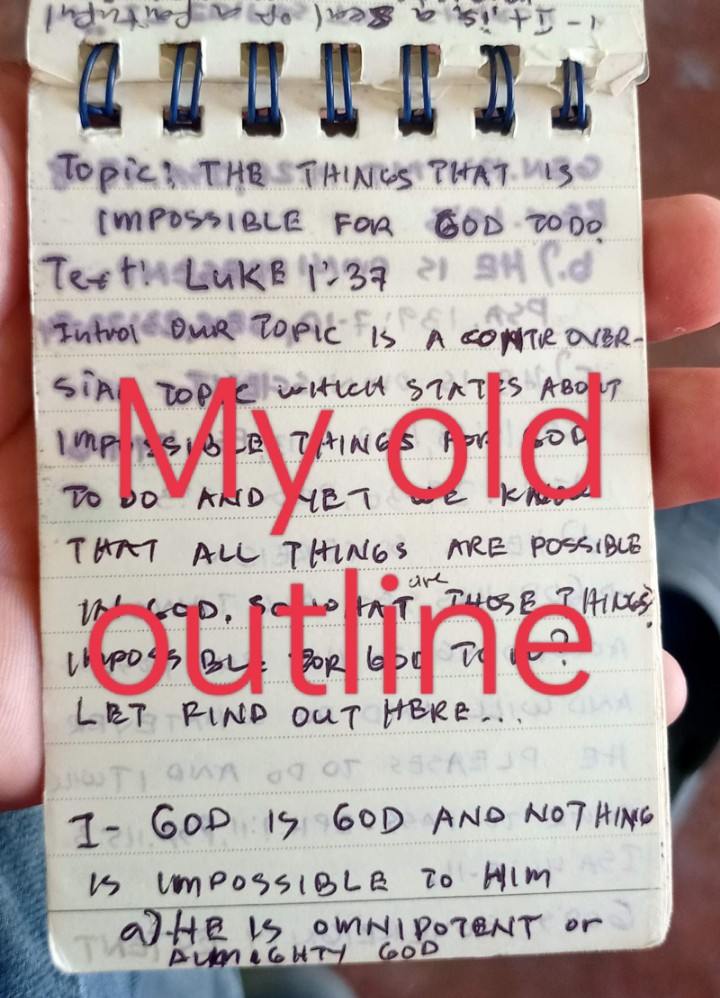
Our topic is an eyebrow-raising one because we know that nothing is impossible for God; He can do whatever He wants as long as it pleases Him (Psa. 115:3), yet we still affirm, as far as the Scriptures show, that there are certain things God will not and cannot do despite being the Supreme Being over all creation. To move further, what are these things that are impossible for God to do? Let us find out here.


I. Let Us Establish That God Is God and Nothing Is Impossible for Him.


A. God is omnipotent — Almighty God – Gen. 17:1; Matt. 19:26; Isa. 45:18; Rev. 19:6


B. God is omnipresent — He is present everywhere – Psa. 139:7–10; Jer. 23:23–24


C. God is omniscient – Acts 15:18; Heb. 4:13; Psa. 139:1–6; Matt. 10:29–30; Prov. 15:3


D. God is Sovereign — He has set all things in order according to the counsel of His own will. Psa. 115:3; Isa. 44:6–7; 46:9–10; Eph. 1:11
God’s sovereignty extends to:

  1. Governing the nations – Judges 8:22–23; Psa. 22:28; 47:2; Dan. 4:17, 32–35; Rom. 13:1
  2. Turning the hearts of men in order to fulfill His eternal purpose – Prov. 21:1; Rev. 17:17
  3. Bringing sickness and healing in all manner of sickness – Deut. 28:61; 29:22; cf. Deut. 7:15; Matt. 4:23; 10:11
  4. Bringing calamities, like what happened to Egypt in the days of Moses – Isa. 47:7; Jonah 1:4
  5. Bringing death and giving life – Deut. 32:39–40; 1 Sam. 2:6; Psa. 102:19–20; 104:29
  6. Making poor and making rich – 1 Sam. 2:7

II. Though Nothing Is Impossible for God, He Is God and Is Not Like Man.


A. He Cannot Lie – Num. 23:19; Rom. 3:4; Tit. 1:2; Heb. 6:17–18

* The arch-enemy of God, who is Satan, is the father of lies (John 8:44) — the total opposite of Christ, who is the Truth (John 14:6), the God of truth (Isa. 65:16; Deut. 32:4), and whose truth endures forever (Psa. 117:2).).

B. That He will change – Mal. 3:6; Psa. 89:34; James 1:17

Arthur Pink gave his profound understanding of the immutability of God. He said:
“God is immutable in His essence. His nature and being are infinite, and so subject to no mutations. There never was a time when He was not; there never will come a time when He shall cease to be. God has neither evolved, grown, nor improved. All that He is today, He has ever been, and ever will be. ‘I am the Lord, I change not’ (Mal. 3:6) is His own unqualified affirmation. He cannot change for the better, for He is already perfect; and being perfect, He cannot change for the worse. Altogether unaffected by anything outside Himself, improvement or deterioration is impossible. He is perpetually the same. He only can say, ‘I am that I am’ (Ex. 3:14). He is altogether uninfluenced by the flight of time. There is no wrinkle upon the brow of eternity. Therefore His power can never diminish nor His glory ever fade.”
(The Attributes of God by A. W. Pink, p. 22)


The immutability of God is also a comfort to those who obtained salvation through Christ alone. Why? Because God cannot change His affection toward those who are the objects of His mercy and love (Rom. 8:31–39; 9:18, 23; Psa. 103:17). The solid foundation of our assurance of salvation is the immutability of God (Heb. 6:17–19). Salvation given by God is not something He gives and then takes back — that would mock God’s immutability. We have received our full salvation from God, which cannot be taken back by Him, because His mercies endure forever (Psa. 118:1; Phil. 1:6). Christ said, “I should lose nothing” (John 6:37–39).
All of God’s creatures are mutable and capable of change; God alone is immutable. Lucifer, the perfect being in beauty and wisdom, has changed into Satan. Adam, the perfect human who was created directly by God, has changed from being holy and communing with God to being separate from God, falling into sin, from holiness into corruption. The whole creation that God made, of which He said all things are indeed good, has now become ruined and changed because of sin, is subject to restoration, and shall be gathered together in the fullness of time in Christ (Eph. 1:10).

C. That He can tempt anyone to sin –

Apostle James stated:

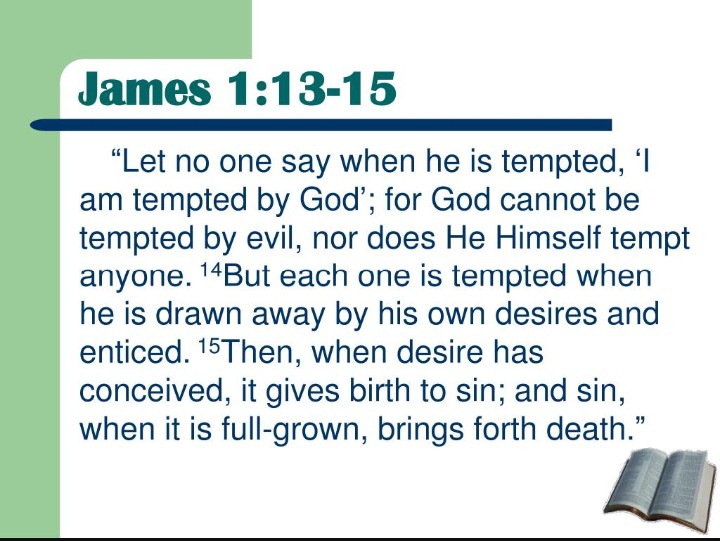
James 1:13-16
[13]Let no man say when he is tempted, I am tempted of God: for God cannot be tempted with evil, neither tempteth he any man:
[14]But every man is tempted, when he is drawn away of his own lust, and enticed.
[15]Then when lust hath conceived, it bringeth forth sin: and sin, when it is finished, bringeth forth death.
[16]Do not err, my beloved brethren.

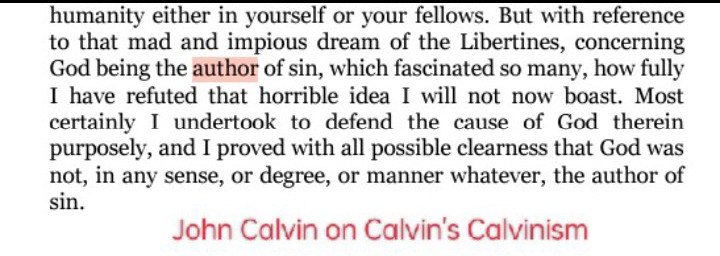
It is Satan who has been the tempter from the beginning (Gen. 3:1–5; Matt. 4:1). Those who misrepresent Calvinism, and the Doctrines of Grace allege that God is the author of sin. No! No one teaches that, not even Calvin himself. God is not the author of sin.

The existence of sin is part of God’s eternal purpose; however, that cannot point to God as the author of sin. Yes, it is God’s predetermined purpose — He who works all things after the counsel of His own will (Eph. 1:11) — He ordained to allow/permit the existence of sin in order for the Covenant of Redemption to come to its full completion. Christ said, “It is finished.”
Christ was foreordained before the foundation of the world to die on the cross for the redemption of God’s people (1 Pet. 1:18–20). We understand that this foreordaining purpose of God was determined from eternity past, before all things were created, before angels were created, since God alone existed in the beginning and all created beings came into existence after His act of creation.


Now, the fall of Satan was included in that eternal purpose of redemption. God knew the heart of Satan; He knew that the sin of pride was growing within him. God never created sin; however, sin was found and first came into existence in the perfect created being who was Hellel/Lucifer. He willfully and freely chose to rebel against God as his pride grew. “Sin was found in thee” (Ezek. 28:14–17; Isa. 14:12–14). If the existence of sin were not part of God’s eternal purpose of redemption, then by His omniscience God would have restrained Satan, by His omnipresence He would have rebuked Satan, and by His omnipotence He would have stopped and changed Satan. To deny that God determined to permit the very existence of sin, I tell you, would violate the very essential attributes of God — His omniscience, omnipresence, and omnipotence.


Nevertheless, God ordained that sin should come to pass so that His holiness might be manifested. God’s laws are the manifestation of His holiness and perfection, and by the violation of His laws His holiness shines all the brighter. God knew that Satan had entered His beautiful Garden of Eden; God omnisciently knew and omnipresently perceived that Satan was tempting Eve. So why did He not stop Satan’s wickedness? As I provided the answer above, Christ was foreordained to suffer and die before the creation of all things. The Apostle Paul stated:

Ephesians 3:11-According to the eternal purpose which he purposed in Christ Jesus our Lord:

Ephesians 1:9-11
[9]Having made known unto us the mystery of his will, according to his good pleasure which he hath purposed in himself:
[10]That in the dispensation of the fullness of times he might gather together in one all things in Christ, both which are in heaven, and which are on earth; even in him:[11]In whom also we have obtained an inheritance, being predestinated according to the purpose of him who worketh all things after the counsel of his own will:

Objection:

Someone had told me that believing the Sovereignty of God that is intricately and meticulously working all things would be a clear implications that God is the author of all sinfulness and wickedness since the beginning of time and in all the history.

Answer:

It is undeniably true that God is working all things after the counsel of His own will however freewill advocates could glimpse the surface of God’s working merely on positive events they have negated sins as part of God’s eternal purposed.

Alright, let us elaborate this in a brief manner to convey to our readers mind that God whose in charge in the human history could not be the author of sin neither in any instances since the beginning of time.

The truth is that every individual after the fall of Adam into sin human being never lose its will, however it is not in the same concept of libertarians that could be extended beyond the fallen sinful condition of man, biblically speaking the will of a sinful being is enslave of sin (John 8:34), free to fulfill the sinful desires but incapable of any holiness acceptable by God not unless by Divine regeneration. Ephesians 2:1-5 clearly stated:

1 • And you hath he quickened, who were DEAD in trespasses and sins;
2 • Wherein in time past ye walked according to the course of this world, according to the prince of the power of the air, the spirit that now worketh in the children of disobedience: [noticed that man who is being dead in sins is walking in sinfulness and in accordance to satan’s will]
3 • Among whom also we all had our conversation in times past in the lusts of our flesh, fulfilling the desires of the flesh and of the mind; and were by nature the children of wrath, even as others. [ the desire of a man who is dead in sins is only to fulfill the desire of sinful flesh being as children of wrath]
4 • But God, who is rich in mercy, for his great love wherewith he loved us,
5 • Even when we were dead in sins, hath quickened us together with Christ, (by grace ye are saved;) [it is only by Divine subjective Love some sinners are regenerated from deadness of sin that they may live together with Christ and be in Heaven] 6 • And hath raised us up together, and made us sit together in heavenly places in Christ Jesus: [ Emphasis mine: JJM]

Now my point is that when man commits sin, God never give impulse, commands, tempts, nor authored the intention, desire, or enactment of sin. God is simply letting man to fulfill his own sinful will and lusts.

Psalms 81:12
So I GAVE THEM UP unto their own hearts’ lust: and they walked in their own counsels.

Romans 1:26
For this cause God GAVE THEM UP unto vile affections: for even their women did change the natural use into that which is against nature.

2 Thessalonians 2:10-12
[10]And with all deceivableness of unrighteousness in them that perish; because THEY RECEIVED NOT the love of the truth, that they might be saved.
[11]And FOR THIS CAUSE God shall send them strong delusion, that they should believe a lie:
[12]That they all might be damned who believed not the truth, but had pleasure in unrighteousness.

When God determined to Permit man’s own sinful lust that is, on the other hand, the exact fulfillment of His eternal purpose.

We may cite as an example the predetermined suffering and death of Christ. God did determine that the worst sin, the worst crime ever committed by man  even the killing of His only begotten Son would come to pass. It cannot be denied that this predetermined purpose was not accidental; it was an apparent and deliberate purpose of God beforehand that Christ should be killed by the hands of wicked men. However, God the Father never tempted those wicked men into killing His only begotten Son — otherwise, those crucifiers would not be accountable for their sins, and God would be the one ultimately accountable for this death. God forbid such thinking! God permitted the evil intentions of those men to come to pass, which was in accordance with His determined purpose and foreknowledge.

Acts 2:23
Him, being delivered by the determinate counsel and foreknowledge of God, ye have taken, and by wicked hands have crucified and slain.

Acts 4:27-28
[27]For of a truth against thy holy child Jesus, whom thou hast anointed, both Herod, and Pontius Pilate, with the Gentiles, and the people of Israel, were gathered together,
[28]For to do whatsoever thy hand and thy counsel determined before to be done.

Prior to the time of His death, Christ said, “My time has not yet come” (John 7:8). Many men intended to kill Christ, but no one touched Him to harm Him because it was not yet the appointed time (John 7:30; 8:20). He even knew when His time was drawing near (Matthew 26:18; John 17:1).

Here we see that God’s working is not like a string attached to everything, or like a remote control forcing every action — as the false accusations and misrepresentations promoted by libertarian free will advocates against Calvinistic thinking on God’s sovereignty would suggest. Rather, it is the times and seasons in which every purpose takes place, as God revealed to King Solomon:

Ecclesiastes 3:1,11,14
[1]To every thing there is a season, and a time to every purpose under the heaven:
[11]He hath made every thing beautiful in his time: also he hath set the world in their heart, so that no man can find out the work that God maketh from the beginning to the end.
[14]I know that, whatsoever God doeth, it shall be for ever: nothing can be put to it, nor any thing taken from it: and God doeth it, that men should fear before him.

In the Calvinistic understanding of the will of a man fallen into sin, the will has never been destroyed or extinguished, but it is influenced by its enslavement to sin. Even though the will is under sin, it is not capable of surpassing God’s eternal purpose or taking God by surprise – as if God would say, “That was not included in My plan.” The Scriptures reveal that man has many plans, but God’s eternal plan shall always come to pass:

Psalms 33:10-11
[10]The LORD bringeth the counsel of the heathen to nought: he maketh the devices of the people of none effect.
[11]The counsel of the LORD standeth for ever, the thoughts of his heart to all generations.

Proverbs 19:21
[21]There are many devices in a man’s heart; nevertheless the counsel of the LORD, that shall stand.

Proverbs 16:9,33
[9]A man’s heart deviseth his way: but the LORD directeth his steps.
[33]The lot is cast into the lap; but the whole disposing thereof is of the LORD.

James 4:13-15
[13]Go to now, ye that say, To day or to morrow we will go into such a city, and continue there a year, and buy and sell, and get gain:
[14]Whereas ye know not what shall be on the morrow. For what is your life? It is even a vapour, that appeareth for a little time, and then vanisheth away.
[15]For that ye ought to say, If the Lord will, we shall live, and do this, or that.

Creatures will cannot be equal to or above to the Almighty and Sovereign will of God, because if it were, man would be equally or more sovereign than God, and man would thwart and change the purpose of God written in the scriptures. The fact is that God can use man’s evil intentions and desires to turn their wicked hearts to bring God’s predetermined plan into existence.

Genesis 50:20
But as for you, ye thought evil against me; but God meant it unto good, to bring to pass, as it is this day, to save much people alive.

Psalms 105:25
He turned their heart to hate his people, to deal subtilly with his servants.

Proverbs 21:1
The king’s heart is in the hand of the LORD, as the rivers of water: he turneth it whithersoever he will.

If you have questions you can freely ask and we’ll try to answer that as far as scriptures reveal. God bless.