Text: Acts 10:1-48
The narrative of Cornelius has been highly debated among Bible students and theologians. Many questions have arisen concerning his salvation and regeneration. Was Cornelius saved prior to the preaching of the Apostle Peter? Was he regenerated before believing in Christ? How could he have been saved without first hearing the Gospel of Christ?
This is a heated area of study, yet it receives relatively little attention among Bible-believing people. In the ongoing battle over soteriology, Pelagians and Semi-Pelagians have argued that the case of Cornelius presents a problem for those who adhere to monergistic soteriology, whom they commonly label as Calvinists. They argue that the doctrine that regeneration precedes faith encounters difficulty when applied to the case of Cornelius.
Although I firmly believe in the biblical truth that regeneration is necessary for genuine faith, I have received the same label as a Calvinist, despite never having read the works of Calvin or Augustine. My conviction comes primarily from what I understand to be the simplicity of the biblical truth revealed in Ephesians 2:1–5: those who are “dead in trespasses and sins” need God to give them life before they can be spiritually active toward Him.
Just as a physically dead person cannot perform physical actions because physical life is absent, so spiritual death describes man’s inability to produce spiritual righteousness before God apart from divine life. The spiritually dead person therefore needs to be made alive by God before he can respond to Him in genuine spiritual faith.
Therefore, the case of Cornelius deserves careful examination. Rather than allowing theological labels to determine our interpretation, we must allow the biblical text itself to answer the questions: What was the spiritual condition of Cornelius before Peter preached Christ to him? How was Cornelius saved without hearing the Gospel? And what exactly occurred when the Holy Spirit fell upon him and those who heard the Word?
These questions make the narrative of Cornelius one of the most important passages to examine when considering the relationship between divine regeneration, saving faith, Gospel revelation, and the sovereign initiative of God in salvation.
1- What was the spiritual condition of Cornelius before Peter preached Christ to him?
Answer: Cornelius was Saved and Regenerated before the Preaching of Peter.
- He was a devout man (verse 2)—a godly man. Cornelius is described as “a devout man” (Acts 10:2), indicating that he possessed a genuine reverence for God and sought to live according to the standard of the God whom he served. His devotion was not merely an outward religious practice; it was directed toward the true God.
This is consistent with the biblical description of the godly: “But know that the LORD hath set apart him that is godly for himself: the LORD will hear when I call unto him” (Psalm 4:3).
Therefore, the description of Cornelius as a devout and God-fearing man should be taken seriously. The question is not simply whether Cornelius had religious activity, but how a Gentile who had not yet received the fuller revelation of Christ could possess such genuine Godward devotion. This invites us to examine whether God’s gracious work had already begun in Cornelius before Peter’s preaching, while recognizing that Peter was still sent to bring him the fuller Gospel concerning Jesus Christ. - He feared God (verse2) . An unregenerated man does not seek God or fear Him, as Romans 3:10–11, 18 declares. Yet Cornelius possessed the fear of God. This fear of the Lord is closely associated with true wisdom and knowledge of God: “The fear of the LORD is the beginning of knowledge” (Prov. 1:7), and “The fear of the LORD is the beginning of wisdom” (Prov. 9:10).
Therefore, Cornelius’s fear of God should not be dismissed as merely natural morality or human sincerity. Scripture presents the fear of the Lord as something that God Himself graciously places within the hearts of His people. God promised, “I will give them one heart, and one way, that they may fear me for ever” (Jer. 32:40), and, “I will give them an heart to know me, that I am the LORD” (Jer. 24:7).
Thus, the presence of genuine fear and knowledge of God in Cornelius raises an important theological question: Could this Godward fear exist apart from a prior work of divine grace in his heart? If Scripture teaches that the natural man does not seek God or fear Him, while also teaching that God gives His people a heart to know Him and fear Him, then Cornelius’s fear of God deserves to be examined as evidence of God’s prior gracious work in him. - His prayer was heard by God (Acts 10:31). The angel specifically told Cornelius, “Thy prayer is heard.” This is significant because Scripture repeatedly distinguishes between the prayers that God accepts and the prayers of those who reject Him. “The eyes of the Lord are over the righteous, and his ears are open unto their prayers” (1 Peter 3:12). Likewise, “The sacrifice of the wicked is an abomination to the LORD” (Prov. 15:8), and “He that turneth away his ear from hearing the law, even his prayer shall be abomination” (Prov. 28:9).
Cornelius’s prayer therefore cannot simply be dismissed as the prayer of an unregenerated unbeliever. It was a prayer directed toward God in faith—a prayer in which God delighted. Proverbs 15:8 declares, “the prayer of the upright is his delight,” while James 5:15 speaks of “the prayer of faith.”
Furthermore, Scripture establishes that “without faith it is impossible to please him” (Heb. 11:6). This corresponds with Romans 8:8: “So then they that are in the flesh cannot please God.” Paul further teaches that the Spirit Himself works within God’s people in their weakness: “the Spirit itself maketh intercession for us with groanings which cannot be uttered” (Rom. 8:26). Thus, genuine Godward prayer is not merely the product of natural human ability but is intimately connected with the gracious work of God by His Spirit.
If Cornelius’s prayer was heard and accepted by God, and if God is pleased only by faith, then his case raises a significant question concerning the spiritual work God had already accomplished in him.
Thus, Acts 10:31 should not be treated as an insignificant detail. It contributes to the larger picture of Cornelius as a man who feared God, was devout, prayed to God, and whose prayer was heard by Him—all before Peter preached the fuller Gospel concerning Christ. The crucial question, therefore, is whether these Godward responses were themselves the fruit of a prior work of divine grace and regeneration.
2. How was Cornelius saved without hearing the Gospel?
Answer: 1- The gospel was proclaimed as early as the fall of Adam. Theologians call Genesis 3:15 the protoevangelium, the first announcement of redemption through the woman’s offspring. The sacrificial death of Christ was also foreshadowed when God made garments of skin to cover Adam and Eve’s nakedness (Gen. 3:21), a picture of the righteousness of Christ that covers sinners (2 Cor. 5:21). The gospel was later preached beforehand to Abraham (Gal. 3:8), who was promised that all nations would be blessed through him.
Cornelius was a devout, God-fearing man (Acts 10:2) who had come to heard and know the Old Testament Gospel, the promise of the coming Messiah. Like the Ethiopian eunuch (Acts 8:26-39) and Apollos (Acts 18:24-28), he possessed real knowledge of the Savior, yet he did not know that the promised Messiah had already been revealed in Jesus Christ. For this reason, God Himself sent Peter to Cornelius’s house. Cornelius and his household became the first Gentile household to hear the gospel of Jesus Christ proclaimed, and to receive the gifts of the Holy Spirit (Acts 10:34-48).
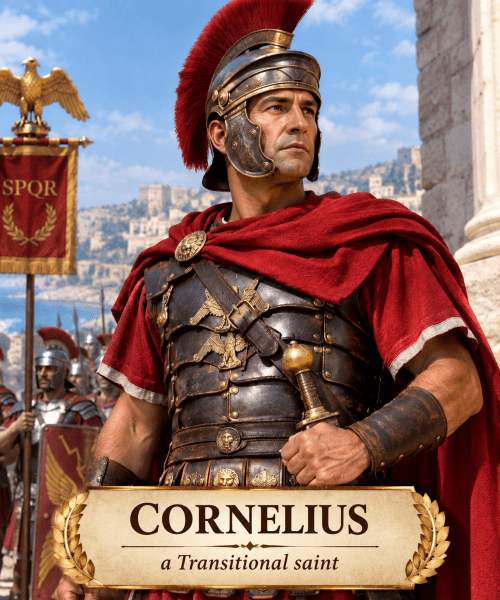
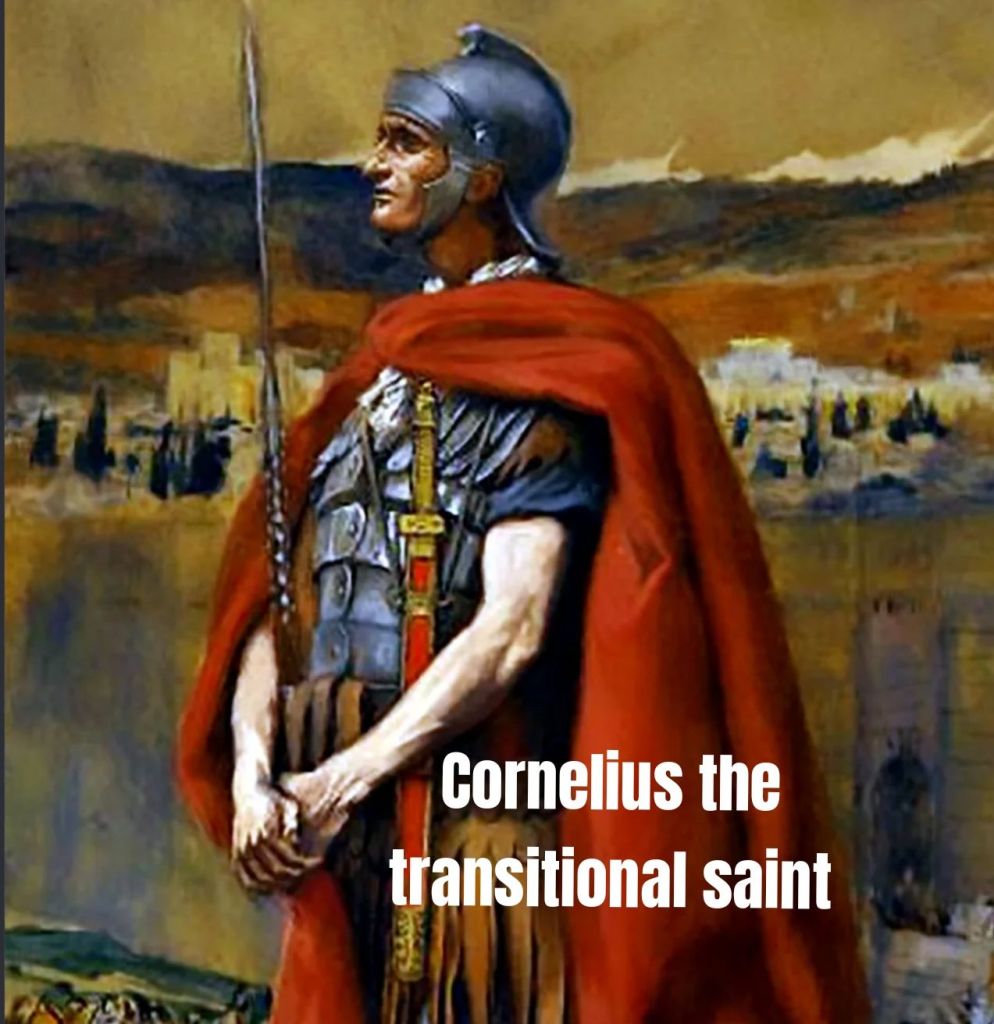
- Cornelius had the same faith as all the Old Testament saints, a faith that looked ahead to the promised Messiah. I call such believers the “transitional saints,” because they lived between the Old and New Testaments. Cornelius knew the Messiah through the Old Testament gospel, but that promise had since been fulfilled at Calvary and the empty tomb. His knowledge therefore had to be completed by the proclamation of the risen Christ, and the same was true of the other transitional saints. This was now possible because the Great Commission was already being carried out (Matt. 28:19-20), and so the gospel was declared to him.
3. And what exactly occurred when the Holy Spirit fell upon him and those who heard the Word?
Answer: Cornelius was already regenerated, as the evidence above shows. He displayed the fruit of the Holy Spirit as a devout, God-fearing man whose prayers were heard by God (Acts 10:2, 4). On this occasion, however, something distinct took place. While Peter was still speaking, the Holy Spirit fell on Cornelius and all who were gathered with him (Acts 10:44). This was not an individual experience but a corporate one, the same as what happened to the believers at Pentecost in Acts 2. The gifts of the Spirit were poured out on the Gentiles just as they had been on the Jewish believers, and they spoke in tongues and magnified God (Acts 10:45-46). Peter, who witnessed it, recognized that they had received the Holy Spirit “just as we did” (Acts 10:47; 11:15-17).
God bless.

